Deep Learning- CNN, GAN, RNN, LSTM, GPT, VAE
Deep Learning- CNN, GAN, RNN, LSTM, GPT, VAE
What is Deep Learning?
Deep Learning (DL) is a subfield of Machine Learning (ML) that uses neural networks with many layers (hence "deep") to analyze data, learn from it, and make decisions.
These models attempt to mimic how the human brain processes information, using artificial neural networks to model complex patterns and representations.
Deep learning algorithms automatically learn and improve from experience without being explicitly programmed.
Deep learning has revolutionized fields such as computer vision, natural language processing (NLP), and speech recognition, providing state-of-the-art results for a variety of tasks.
It's particularly effective with large amounts of data and high-dimensional data, such as images, text, and audio.
Different Types of Deep Learning Models Based on Popularity:
Here are the different types of deep learning models ordered by their popularity and real-world applications:
1. Convolutional Neural Networks (CNNs)
Popularity : High
Applications : Primarily used in image-related tasks.
Use Cases :
Image classification (e.g., recognizing objects in photos)
Object detection (e.g., detecting faces or cars in images)
Image segmentation (e.g., separating foreground and background)
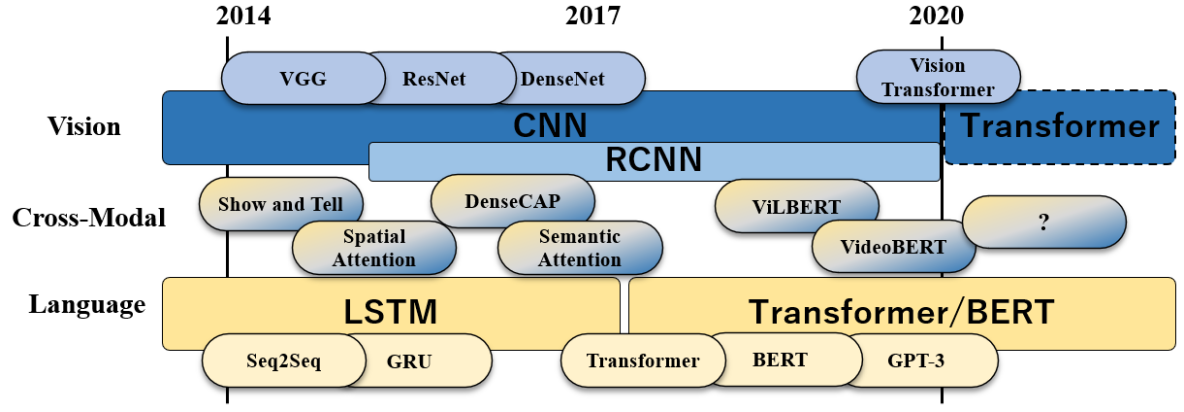
Explanation : CNNs excel at handling grid-like data (such as images) and are often used for computer vision tasks. Their popularity stems from their success in various vision-related problems.
2. Generative Adversarial Networks (GANs)
Popularity : High
Applications : Image generation, enhancement, and more.
Use Cases :
Image generation (e.g., creating photorealistic images from random noise)
Style transfer (e.g., applying artistic styles to images)
Deepfakes (e.g., creating synthetic media)
Explanation : GANs are extremely popular in the realm of Generative AI for producing realistic and high-quality synthetic data. The unique adversarial training mechanism makes them highly effective at generating new data.
3. Recurrent Neural Networks (RNNs)
Popularity : Medium-High
Applications : Sequential data like time-series or text.
Use Cases :
Text generation (e.g., completing sentences)
Speech recognition (e.g., converting spoken language to text)
Time-series forecasting (e.g., stock market prediction)
Explanation : RNNs are widely used for tasks involving sequential data, where the order of the data matters, such as time series and natural language. However, they have been largely superseded by more advanced models like LSTMs and Transformers.
4. Long Short-Term Memory (LSTM) Networks
Popularity : High
Applications : Sequence modeling, especially for longer-term dependencies.
Use Cases :
Machine translation (e.g., translating text from one language to another)
Speech synthesis (e.g., converting text to speech)
Sentiment analysis (e.g., determining the emotional tone of a text)
Explanation : LSTMs are a type of RNN designed to address the vanishing gradient problem and excel at learning long-range dependencies in data. They have been the go-to solution for many sequential tasks before the rise of Transformer models.
5. Transformer Networks
Popularity : Very High
Applications : Natural Language Processing (NLP), especially in modern AI models.
Use Cases :
Machine translation (e.g., Google Translate)
Text summarization (e.g., automatically summarizing articles)
Question answering (e.g., BERT, GPT models)
Explanation : Transformers, particularly in the form of models like BERT and GPT , have revolutionized NLP by significantly improving performance on tasks like translation, summarization, and sentiment analysis. They use self-attention mechanisms to handle sequences of data in parallel, making them faster and more scalable than RNNs.
6. Variational Autoencoders (VAEs)
Popularity : Medium
Applications : Generative modeling and data representation.
Use Cases :
Data generation (e.g., creating images)
Data compression (e.g., reducing dimensionality)
Anomaly detection (e.g., identifying unusual data patterns)
Explanation : VAEs are used in unsupervised learning for generating new data points similar to the training data. They have found popularity in research and applications requiring probabilistic modeling.
7. Autoencoders (AEs)
Popularity : Medium
Applications : Feature extraction, data denoising, and anomaly detection.
Use Cases :
Dimensionality reduction (e.g., compressing data)
Image denoising (e.g., removing noise from images)
Anomaly detection (e.g., identifying fraud or unusual behavior)
Explanation : Autoencoders are used to learn a compressed representation of the input data. Though less widely used in generative tasks than GANs, they are still popular for feature extraction and unsupervised learning.
8. Neural Style Transfer (NST)
Popularity : Medium
Applications : Artistic image transformation.
Use Cases :
Turning photos into artwork (e.g., applying a famous painter's style to a photo)
Image manipulation (e.g., creating artistic effects)
Explanation : NST is a technique used to blend the style of one image with the content of another. It's popular in creative applications, especially in the context of art and entertainment.
9. Deep Belief Networks (DBNs)
Popularity : Low
Applications : Unsupervised learning and generative tasks.
Use Cases :
Feature learning
Dimensionality reduction
Generative modeling
Explanation : DBNs are considered an earlier model in deep learning that introduced the concept of stacking layers of Restricted Boltzmann Machines (RBMs). They are not as commonly used today, as newer models like GANs and VAEs have taken over most of their tasks.
10. Siamese Networks
Popularity : Medium-Low
Applications : Similarity learning and one-shot learning.
Use Cases :
Face verification (e.g., comparing whether two photos are of the same person)
Signature verification
One-shot learning (e.g., identifying an object after seeing only one example)
Explanation : Siamese Networks are specialized in comparing two inputs and determining their similarity, making them ideal for tasks like verification and one-shot learning.
Summary of Deep Learning Models (Popularity) :
High Popularity :
CNN
GAN
LSTM
Transformer (BERT, GPT)
Medium-High Popularity :
VAEs
RNNs
Medium Popularity :
Autoencoders (AEs)
Neural Style Transfer (NST)
Low Popularity :
Deep Belief Networks (DBNs)
Siamese Networks
These models represent the core types of Deep Learning architectures and have been used extensively across different domains of AI , especially in computer vision , natural language processing , and generative modeling. Their popularity is driven by their applicability and the results they deliver in solving complex problems with large datasets.
Related / Referneces
- Perspectives and Prospects on Transformer Architecture for Cross-Modal Tasks with Language and Vision >> https://ar5iv.labs.arxiv.org/html/2103.04037