RAG & RagOps
RAG & RagOps
What is RAG (Retrieval-Augmented Generation)?
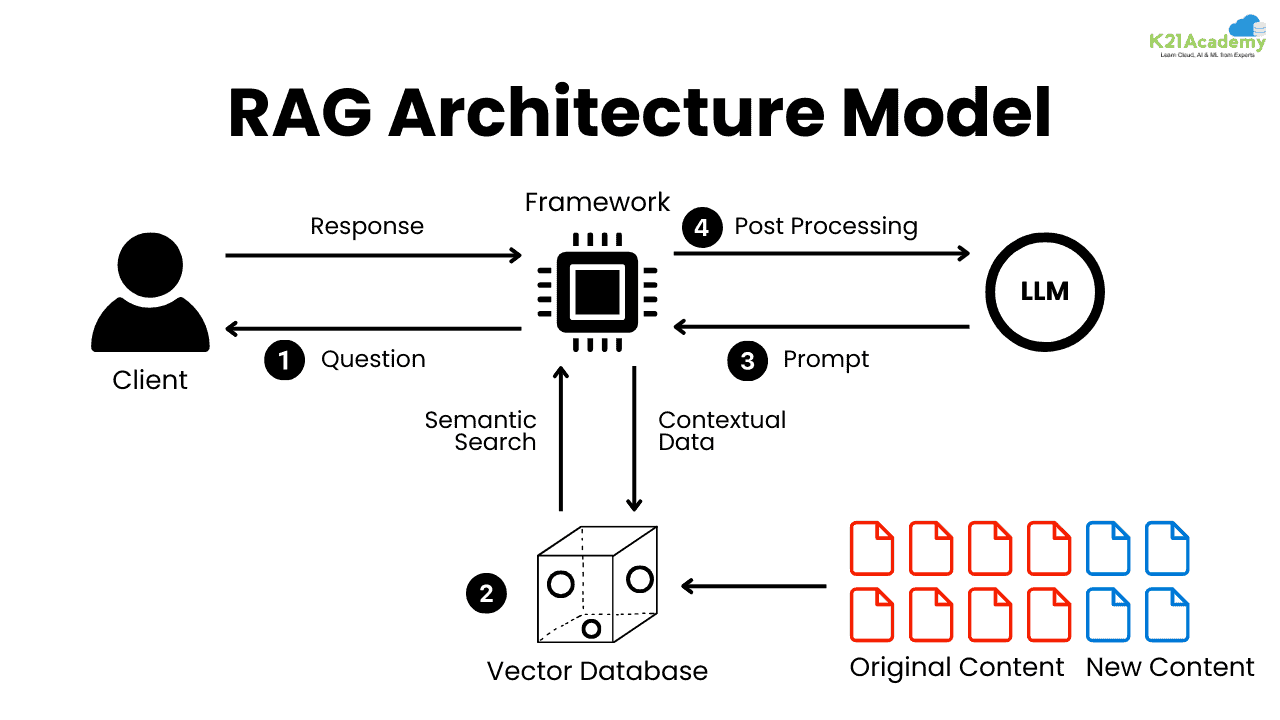
RAG (Retrieval-Augmented Generation) is a method in artificial intelligence (AI) that combines two powerful techniques: retrieval and generation. It helps AI models find accurate and relevant information when generating answers.
Retrieval : This step involves searching a database or collection of documents to find the most relevant information related to a query.
Generation : Once the information is retrieved, the AI uses it to create a detailed and accurate response.
For example, if you ask an AI-powered chatbot, "What are the symptoms of the flu?" RAG will first look for reliable sources about flu symptoms (retrieval) and then generate a complete answer using that information (generation).
RAG is especially useful when large language models (LLMs) alone may not have up-to-date or domain-specific knowledge.
What is RAGOps?
RAGOps (Retrieval-Augmented Generation Operations) refers to the processes, tools, and techniques used to manage and optimize RAG systems. Just like MLOps or LLMOps for machine learning and language models, RAGOps ensures that RAG-based systems are deployed, monitored, and maintained efficiently.
Key aspects of RAGOps include:
Data Management : Ensuring the retrieval system accesses high-quality, relevant, and up-to-date data.
System Integration : Seamlessly connecting retrieval systems with generation models.
Performance Monitoring : Tracking the accuracy and efficiency of RAG systems to ensure they meet user needs.
Scaling : Managing resources to handle large numbers of requests or growing datasets.
Continuous Improvement : Regularly updating the retrieval system and generation model to improve performance.
RAGOps is essential for businesses and applications where accuracy and real-time information are critical, such as customer support, healthcare, and financial services.
Challenges in RAG and RAGOps
Data Quality and Relevance
RAG systems heavily rely on the data they retrieve. If the data is outdated, biased, or irrelevant, the generated responses may be incorrect.
Maintaining a clean and comprehensive database is challenging, especially as data grows.
Latency
The retrieval process can take time, especially when searching through large datasets.
Ensuring low-latency responses is crucial for real-time applications.
Scalability
As the number of users or the size of the dataset increases, scaling the RAG system efficiently becomes complex.
Balancing computational costs and performance is another challenge.
Integration Issues
Connecting retrieval systems with LLMs requires careful engineering to ensure smooth communication and data flow.
Differences in data formats or model architectures can cause integration hurdles.
Bias and Ethical Concerns
Retrieved data may contain biases, which can lead to biased or misleading outputs.
Ensuring ethical use of RAG systems requires robust monitoring and control.
Monitoring and Maintenance
Tracking the performance of both retrieval and generation components is complex, especially when they interact dynamically.
Regular updates are needed to maintain accuracy and efficiency.
Future Trends in RAG and RAGOps
Improved Retrieval Techniques
Future RAG systems will use more advanced retrieval methods, such as neural search, to find highly relevant information faster and more accurately.
Real-time updates to retrieval databases will enhance the system’s ability to handle dynamic information.
Domain-Specific RAG
Customized RAG systems for specific industries (e.g., healthcare, legal, or finance) will become more common.
These systems will integrate specialized knowledge bases to deliver more precise responses.
Hybrid Models
Combining multiple LLMs or retrieval engines into a single RAG system will improve performance and flexibility.
For example, using one model for general understanding and another for domain-specific tasks.
Enhanced RAGOps Platforms
RAGOps platforms will become more user-friendly, offering tools to automate data curation, model updates, and performance monitoring.
Businesses will be able to deploy and manage RAG systems without requiring deep technical expertise.
Focus on Ethical AI
Greater emphasis will be placed on ensuring RAG systems are unbiased and ethical.
Techniques like explainability and transparency in retrieval and generation will be prioritized.
Edge RAG Systems
Deployment of RAG systems on edge devices (like smartphones) will allow for faster, offline responses.
This is especially useful in scenarios where internet connectivity is limited.
Multimodal Capabilities
Future RAG systems will handle not just text but also images, videos, and other data formats.
For instance, retrieving visual information to complement textual answers.
Conclusion
RAG (Retrieval-Augmented Generation) is revolutionizing how AI systems access and generate information, making responses more accurate and context-aware. However, managing these systems effectively requires RAGOps, which focuses on deployment, monitoring, and optimization.
Despite challenges like data quality, scalability, and ethical concerns, advancements in technology and RAGOps platforms are paving the way for more efficient and reliable systems. Future trends such as domain-specific RAG, hybrid models, and ethical AI will further enhance their capabilities.
RAG and RAGOps hold immense potential to transform industries, from healthcare and education to customer support and beyond. By addressing current challenges and adopting best practices, organizations can unlock the full power of retrieval-augmented generation systems.
Related / References
What is RAG @ Azure AI Foundry https://learn.microsoft.com/en-us/azure/ai-foundry/concepts/retrieval-augmented-generation
RAG in Azure AI Search https://learn.microsoft.com/en-us/azure/search/retrieval-augmented-generation-overview?tabs=docs