L3: Prompt Engineering
L3: Prompt Engineering
26:47
Prompt engineering is a critical skill for effectively interacting with AI models like me. It involves crafting precise and clear inputs to guide the AI's output toward desired results. Here’s a breakdown of key points related to prompt engineering:
Related Readings:Top 10 Powerful Prompt Engineering Tools for Ai Projects in 2025 | K21 Academy
** What is Prompt Engineering?**
1. Understanding the Model’s Capabilities
Know the AI’s strengths and limitations.
Understand how the model processes and responds to different types of input.
AI models perform better when given structured, specific instructions.
2. Clear and Concise Instructions
Be specific in your instructions to avoid ambiguity. Clear language reduces the chances of receiving irrelevant or vague responses.
Define the task explicitly: e.g., “Summarize this text in 3 sentences” vs. “Summarize this text.”
If you need the AI to produce specific outputs (like a list, code, or summary), make that clear in the prompt.
3. Contextualizing the Prompt
Providing context is crucial. Whether it’s a piece of text, a question, or a task, additional context helps the AI understand the situation better.
For example, if asking about a technical subject, include relevant background information or any constraints to get more accurate and tailored responses.
4. Iterative Refinement
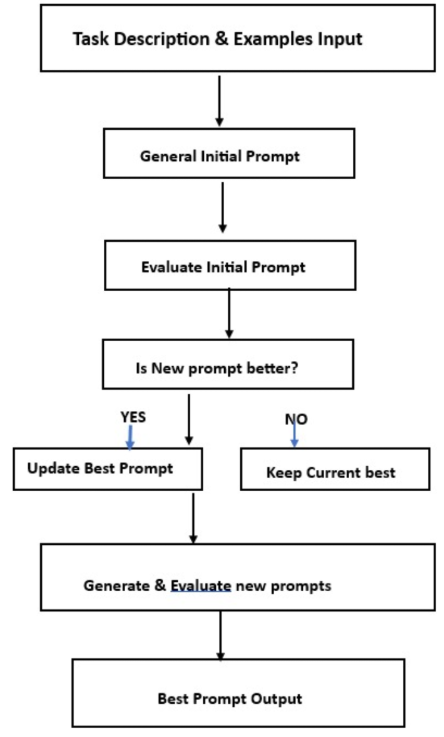
Prompt engineering often requires trial and error. Start with a basic prompt, see what the AI generates, and refine it based on the output.
Use feedback loops to fine-tune the prompt until the AI generates the desired output.
5. Exploring Various Prompt Types
Descriptive Prompts : Direct requests that ask for factual or descriptive information.
- Example: “Describe the concept of quantum computing in simple terms.”
Instructional Prompts : Ask the AI to perform a specific task or provide structured output.
- Example: “Write a Python function that sorts a list of integers in ascending order.”
Conversational Prompts : More informal, open-ended questions that lead to a dialogue.
- Example: “What do you think about the future of artificial intelligence?”
6. Use of Parameters for Fine-Tuning
Some models allow you to adjust parameters like temperature (creativity) and max tokens (length of response) to influence the output.
Temperature : Determines randomness. A higher temperature (closer to 1) produces more diverse and creative responses.
Max Tokens : Controls the length of the response. A lower max tokens will generate shorter responses.
7. Handling Bias and Ethical Concerns
Be mindful of the potential biases in the AI's responses. Prompt engineering can help guide the model toward more balanced or neutral outputs.
Avoid prompts that could inadvertently reinforce harmful stereotypes or provide misleading information.
8. Using Examples in Prompts
Providing examples in the prompt helps the AI understand the format or structure you want in the response.
Example: “Translate the following sentences from English to Spanish: ‘Hello, how are you?’ → ‘Hola, ¿cómo estás?’”
9. Role-Playing and Persona Prompts
You can define a role for the AI to take on (e.g., a tutor, a scientist, etc.) to get more contextually appropriate responses.
Example: “Act as a history professor and explain the causes of World War II in detail.”
10. Advanced Techniques
Chain of Thought : Guide the model to think step-by-step through complex problems (e.g., reasoning or coding problems).
Example: “To solve this equation, first simplify the terms, then isolate the variable, and finally compute the value.”
Few-Shot Learning : Provide a few examples in the prompt to help the model learn the pattern and replicate it.
Example: “Translate the following phrases into French: ‘Good morning’ → ‘Bonjour’; ‘How are you?’ → ‘Comment ça va?’ Now translate: ‘Good evening.’”
11. Using the Right Tone and Style
If you need the response in a certain tone (formal, casual, humorous, etc.), make it explicit in the prompt.
Example: “Write a formal email requesting time off from work.”
12. Constraints and Limitations
Set boundaries for the AI, especially in terms of scope or output type.
Example: “Write a blog post of 300-500 words on the benefits of meditation for stress relief.”
13. Applications of Prompt Engineering
Content Creation : Generating blog posts, articles, ad copy, etc.
Programming : Writing code snippets, debugging, or explaining code.
Chatbots : Developing conversational AI for customer support or personal assistants.
Data Analysis : Summarizing or extracting insights from datasets.
Education : Explaining complex concepts, generating quizzes, or teaching aids.