LLM Architecture
LLM Architecture
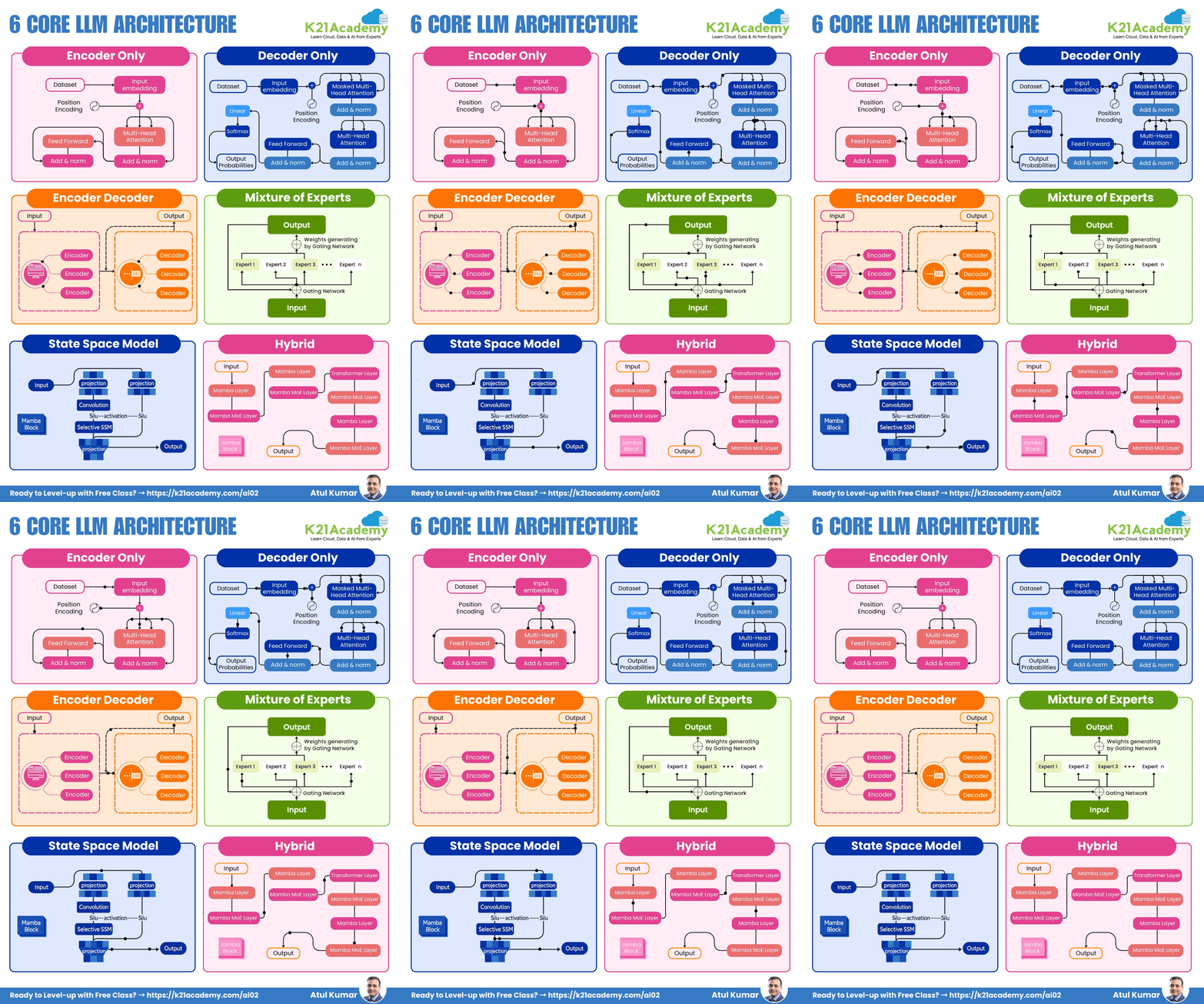
What is LLM Architecture?
LLM (Large Language Model) Architecture refers to how these powerful AI models are built to understand and generate human language. It’s like the brain of the model, determining how it processes the information you give it and how it responds. Depending on the task—whether it's answering a question, translating text, or generating new sentences—the architecture decides how the model works.
There are several types of LLM architectures, each designed for specific tasks. Here are the six core types:
6 Core LLM Architecture:
Encoder Only :
What it is : In this architecture, the model only uses the encoder part to understand the input (like a sentence). First, it turns the words into numbers that the model can understand. Then, it processes these numbers using a special attention system to focus on important parts of the sentence. After that, the model passes the information through a simple processing system to understand it better.
Where it's used : This is used in models like BERT. It’s good for tasks like understanding the meaning of a text, such as answering questions, figuring out emotions in a sentence, or classifying texts.
Decoder Only :
What it is : This architecture uses only the decoder, which helps the model generate text. The model reads some input and then tries to predict the next word or sentence. It does this by looking at the words in the sentence and figuring out what makes sense to come next.
Where it's used : This is used in models like GPT. It's great for tasks like writing stories, completing sentences, or generating new text from a prompt.
Encoder-Decoder :
What it is : This model uses both the encoder and the decoder. The encoder reads the input text and understands it, and the decoder takes that understanding and generates a new output. For example, it might translate a sentence from one language to another.
Where it's used : This is used in models like T5 and BART. It’s ideal for tasks where the model needs to understand the input and create a new output, like translating text or summarizing articles.
Mixture of Experts (MoE) :
What it is : In this architecture, the model has several smaller models, called "experts," each trained to handle a specific type of task. When the model receives an input, it chooses which experts should work on it. This makes the model more efficient and able to handle a variety of tasks.
Where it's used : This is used in models like Switch Transformers. It’s useful for big tasks that require different types of knowledge, such as understanding multiple topics or generating text in different styles.
State Space Model :
What it is : This model is focused on processing data over time. It uses a series of steps to analyze the input and keep track of important information. It can remember things from earlier in the text, which is helpful when dealing with long or complicated sequences.
Where it's used : This is great for tasks where the model needs to remember things for a long time, like forecasting , or when working with text that has important information spread out over a long sentence or paragraph.
Hybrid :
What it is : The hybrid model combines different types of layers, like both Mamba and Transformer layers. This allows the model to handle different tasks by switching between different methods of processing, depending on what’s needed for the task at hand.
Where it's used : This architecture is helpful when a task involves combining information from different sources, like text and images, or when a model needs to be very flexible and adaptable, such as AI-driven assistants that can handle multiple types of questions and requests.
In simple terms, LLM architecture is the blueprint for how the model processes and generates language. Each type of architecture has a different approach to reading, understanding, and producing text, making them suitable for specific tasks like answering questions, writing stories, or translating languages. Each model is designed with a particular function in mind, allowing AI to work efficiently and accurately for a variety of tasks.