L3: AI Agents vs Agentic AI
L3: AI Agents vs Agentic AI
43:57
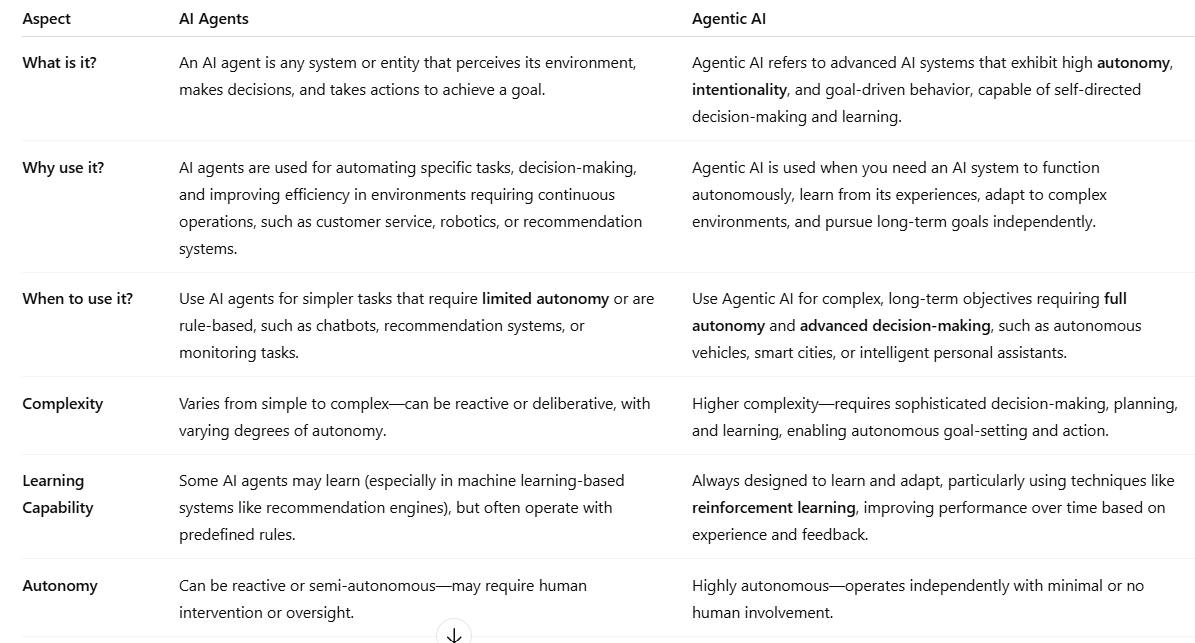
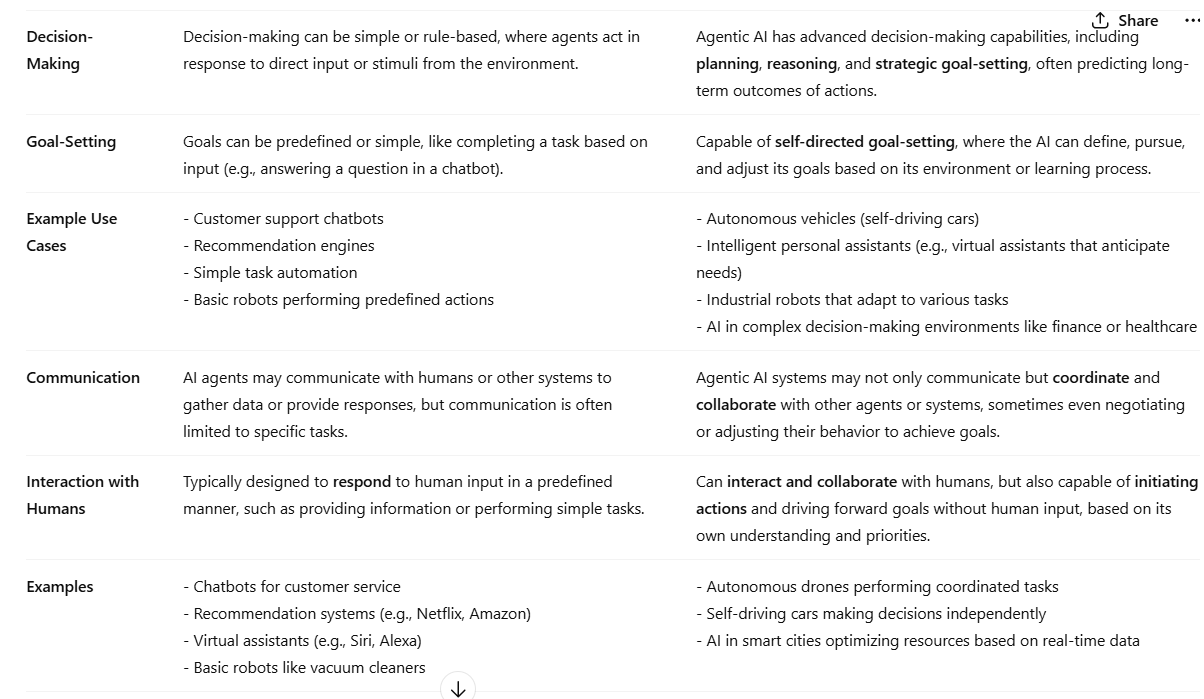
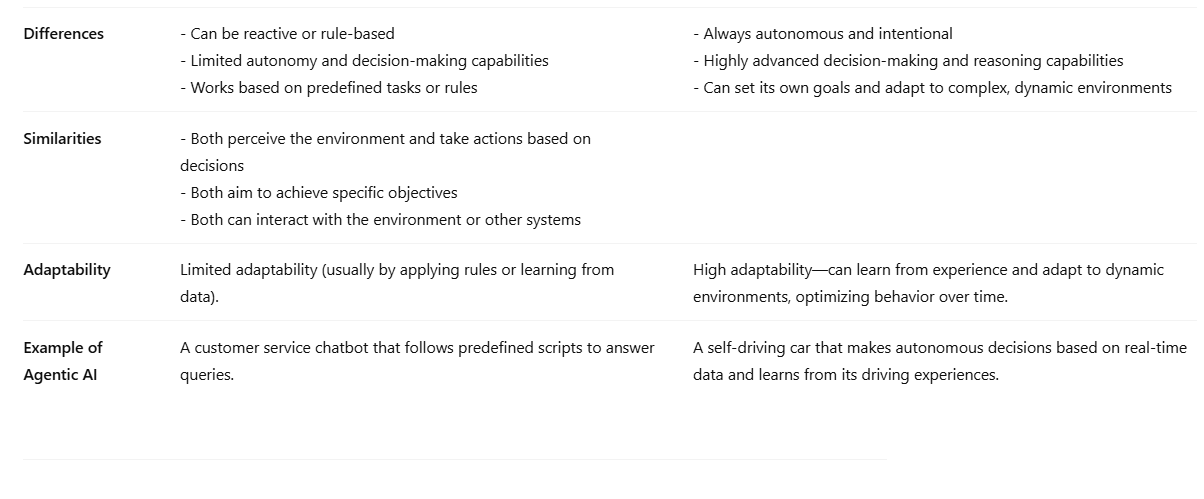
Summary of Similarities :
Goal-Oriented : Both AI agents and Agentic AI systems are designed to achieve goals, whether those are simple tasks (e.g., answering questions) or complex objectives (e.g., optimizing resources in smart cities).
Interaction with the Environment : Both systems interact with the environment and adjust their actions based on perceptions or data from the surroundings.
Autonomy : While AI agents can be semi-autonomous, Agentic AI is characterized by a higher degree of self-direction and decision-making independence.
Summary of Differences :
Complexity and Decision-Making : Agentic AI is far more advanced in terms of autonomy , reasoning , and goal-setting compared to traditional AI agents, which may rely more on predefined rules or simpler algorithms.
Learning and Adaptation : Agentic AI systems typically have the ability to learn from their environment, adapt, and optimize their behavior, while AI agents may be more static or limited to the rules they are programmed with.
Use Cases : AI agents are often used for simpler tasks (like customer service or recommendations), while Agentic AI is used in complex , real-time environments (like autonomous vehicles or large-scale system optimizations).
In conclusion, Agentic AI is an advanced form of AI agent that takes autonomy, goal-setting, and learning to a higher level, allowing it to function independently in dynamic environments where decision-making and adaptation are crucial.