L2: Introduction to Neural Networks
L2: Introduction to Neural Networks
9:59
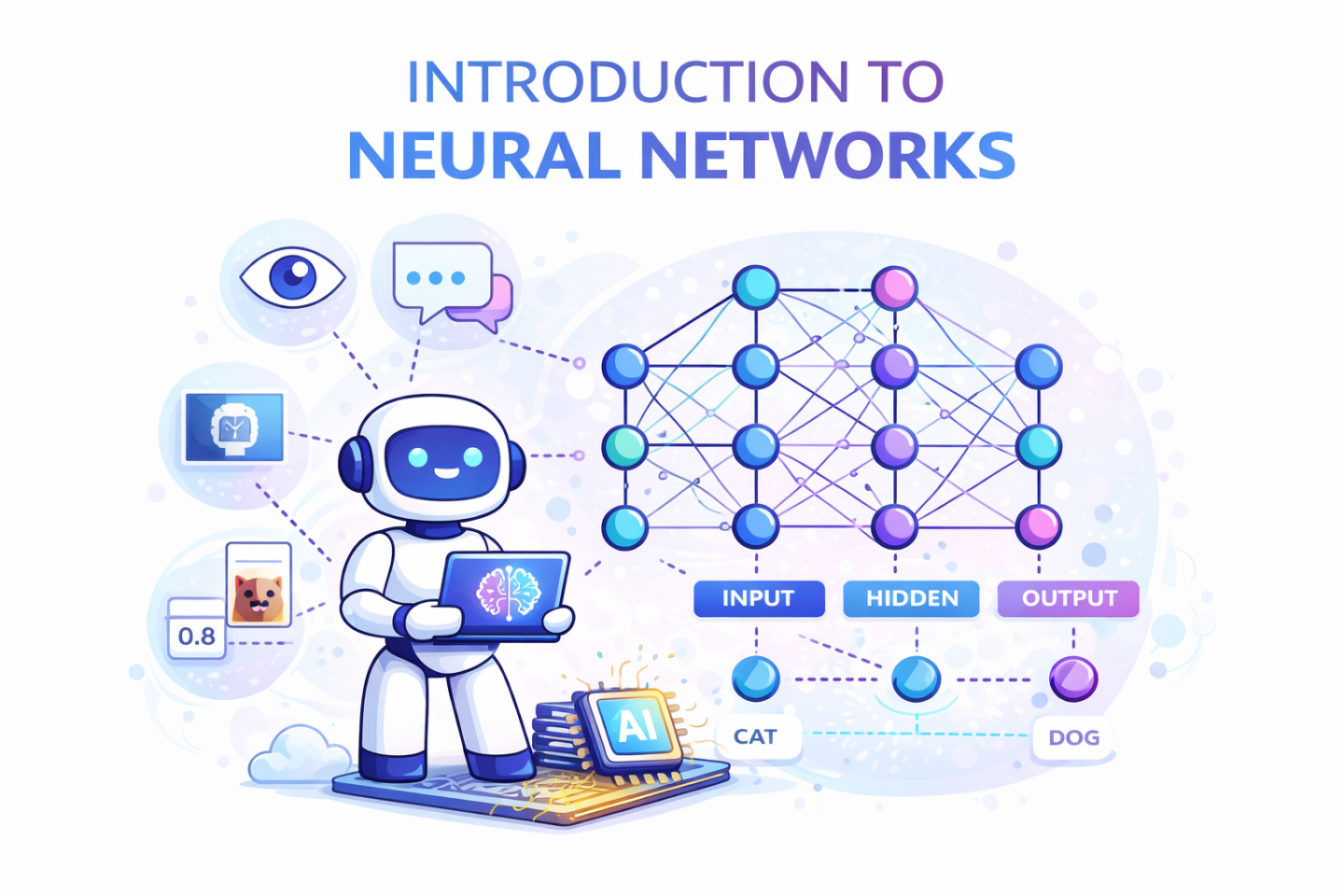
What is a Neural Network?
A Neural Network is a computer system inspired by how the human brain works.
Just like our brain has neurons that receive information, process it, and make decisions, a neural network has artificial neurons that do the same thing — but using math and data.
In simple words:
👉 A neural network learns from examples and makes predictions or decisions.
Why Do We Need Neural Networks?
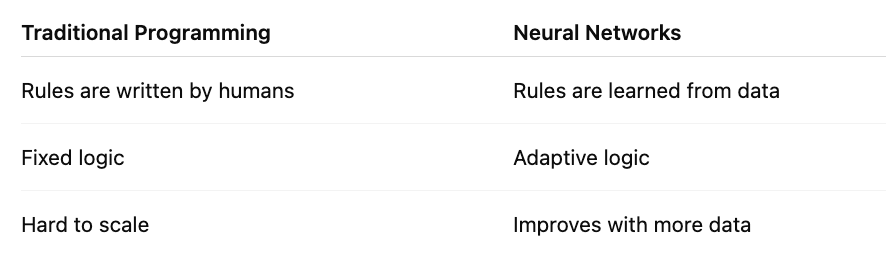
Traditional programs follow fixed rules written by humans.
But many real-world problems don’t have clear rules.
Examples:
How does a computer recognize a face?
How does it understand speech?
How does it detect spam emails?
Neural networks help machines learn patterns automatically from data instead of being explicitly programmed.
Basic Structure of a Neural Network
A neural network is made of layers :
Input Layer
Receives raw data
Example: pixels of an image, numbers, text features
Hidden Layer(s)
Where learning happens
Extracts patterns and relationships
There can be one or many hidden layers
Output Layer
Produces the final result
Example: Yes/No, Cat/Dog, Price prediction
Think of it like:
Input → Thinking → Answer
What is a Neuron (Node)?
A neuron is a small processing unit.
Each neuron:
Takes input values
Multiplies them with weights
Adds a bias
Passes the result through an activation function
Sends output to the next layer
You don’t need to worry about math now — just remember:
👉 A neuron decides how important each input is.
How Does a Neural Network Learn?
Neural networks learn using a process called training.
Simple explanation:
The network makes a prediction
It compares prediction with the correct answer
It calculates the error
It adjusts itself to reduce the error
This repeats many times
Over time, the network becomes better and more accurate.
This learning process is called backpropagation (we’ll cover it later).
Neural Networks vs Traditional Programming
Simple Real-World Examples
Image Recognition – Identifying faces, objects
Speech Recognition – Voice assistants
Text Prediction – Chatbots, autocomplete
Fraud Detection – Banking systems
Medical Diagnosis – Detecting diseases from scans
Types of Neural Networks (Preview)
You’ll learn these in detail later:
ANN – Basic neural network
CNN – For images
RNN / LSTM – For sequences and time data
GAN – For generating images
Transformers – For language models like GPT
Key Takeaways
Neural networks are inspired by the human brain
They learn patterns from data
They are the foundation of Deep Learning
More layers = more powerful learning
Used in almost every modern AI system